
Creating a stunning gallery wall can transform any room from plain to personal and vibrant. This decorative feature is more than just hanging art; it’s about telling a story, sharing memories, and expressing style through a carefully arranged collection. Many people hesitate to create a gallery wall because deciding on artwork, frame combinations, and layout designs can feel confusing. But with some clear steps and smart tips, anyone can design a gallery wall that becomes the highlight of their home.
A gallery wall can fit almost any space, from a narrow hallway to a large living room. It suits all styles: modern, classic, playful, or minimal. The key is thoughtful planning, so each piece works together as a group. Along the way, you’ll learn tricks to avoid common mistakes, how to hang art evenly, and ways to personalize your wall with unique touches. This guide covers everything you need, from the first idea to the final nail in the wall.
Deciding On The Perfect Location
Before you start picking artwork or frames, decide where the gallery wall will go. The right spot makes your display stand out and sets the mood for the whole room.
Popular Spaces For Gallery Walls
- Living rooms: Over the sofa or fireplace is a classic choice.
- Hallways: Long walls are ideal for a linear or grid layout.
- Staircases: Arranging art along the incline adds visual interest.
- Bedrooms: Above the bed creates a cozy, personal feel.
- Home offices: Motivational art and photos boost energy.
A good location has a clear view and enough wall space. Avoid areas with strong direct sunlight, which can fade artwork. Also, check for electrical outlets, switches, or vents that might disrupt your arrangement.
Choosing Art And Photos
The heart of any gallery wall is the art you select. You don’t need expensive originals; mix and match what feels meaningful to you.
Types Of Pieces To Include
- Art prints: Affordable and available in many styles.
- Personal photos: Add warmth and tell your story.
- Postcards or small objects: These create texture and interest.
- Mirrors or clocks: Useful and decorative.
- Text pieces: Quotes or song lyrics in stylish fonts.
For a balanced look, choose a mix of large and small pieces. A common beginner mistake is picking artwork that’s all the same size, which can look flat and boring. Try to include at least one standout piece as a visual anchor.
How Many Pieces Do You Need?
Most gallery walls look great with 5 to 12 pieces, but the exact number depends on your space and wall size. For a small area, 3-5 pieces may be enough. For a large wall, you might go up to 15.

Credit: rossettiart.com
Finding Your Gallery Wall Style
Your gallery wall should fit your taste and your home’s decor. There are many ways to approach the style.
Common Gallery Wall Styles
| Style | Features | Best For |
|---|---|---|
| Eclectic | Mix of colors, frames, and art types | Creative, casual spaces |
| Modern Grid | Same-size frames, lined up in a grid | Minimalist or modern rooms |
| Symmetrical | Balanced, mirror-image layout | Formal or classic spaces |
| Linear | Single row, horizontal or vertical | Hallways, narrow walls |
| Salon Style | Floor-to-ceiling, fills whole wall | Large feature walls |
If you’re unsure, start with a simple grid or an organized cluster. It’s easier to expand later than to fill gaps in a random layout.
Selecting Frames And Matting
Frames are just as important as the art inside. They provide structure and bring the group together.
Choosing The Right Frames
- Matching frames: Creates a clean, uniform look.
- Mixed frames: Adds character and variety.
- Matting: White mats make art pop and give breathing room.
A common mistake is using only bold or ornate frames, which can distract from the art. Try combining simple wood frames with one or two metallic or colored frames for accent.
Frame Size And Orientation
Mix horizontal and vertical frames for energy. Don’t be afraid to include one or two round or oval frames for variety.
Planning Your Layout
Arranging a gallery wall on the floor before hanging saves time and prevents mistakes.
Tools You’ll Need
- Painter’s tape
- Kraft or newspaper
- Scissors
- Measuring tape
- Level
- Pencil
Step-by-step Layout Process
- Trace your frames: Lay each frame on the paper, trace around it, and cut out the shape.
- Tape templates to the wall: Use painter’s tape to attach the paper cut-outs to the wall.
- Adjust spacing: Step back to view. Move pieces until you’re happy with the arrangement.
Aim for 2–4 inches between each frame. Too much space makes the display feel scattered; too little feels crowded.
Example Gallery Wall Spacing
| Wall Size | Number of Frames | Recommended Spacing |
|---|---|---|
| Small (6 ft x 4 ft) | 4–6 | 3 inches |
| Medium (8 ft x 5 ft) | 7–10 | 2–2.5 inches |
| Large (10 ft x 7 ft) | 10–15 | 2 inches |
Hanging Your Gallery Wall
Now it’s time to make your arrangement permanent. Precision matters here, but you don’t need to be a pro.
How To Hang Frames Evenly
- Mark the spots: With templates still on the wall, mark the top center of each frame.
- Measure hanging hardware: Measure from the top of the frame to the hanging point (D-rings, wire, or sawtooth).
- Transfer the measurement: Mark the nail or hook position on the wall.
- Install hardware: Use picture hooks for heavier frames and adhesive strips for light ones.
- Hang frames: Double-check with a level.
For staircases, keep the center of each frame about 57–60 inches from the stair tread line for a natural sightline.
Tips For A Professional Finish
- Use a small level on top of each frame.
- Add rubber bumpers to frame corners to prevent shifting.
- Avoid overcrowding
Credit: focusonnova.com
Personalizing Your Gallery Wall
Gallery walls are a chance to show what matters to you. Go beyond just art prints for a unique touch.
Creative Ideas For Personalization
- Family heirlooms: Small plates, handkerchiefs, or medals.
- Kids’ artwork: Show their creativity in a special frame.
- Travel souvenirs: Maps, tickets, or postcards from trips.
- Seasonal swaps: Change one or two pieces for holidays or seasons.
A subtle but powerful trick: include something unexpected, such as a 3D object or a framed fabric swatch. This adds depth and makes your wall one-of-a-kind.
Common Mistakes To Avoid
Even with planning, some errors are easy to make. Here’s how to dodge them:
- Ignoring the wall size: Don’t use tiny art on a huge wall or oversized frames in a small space.
- Uneven spacing: Inconsistent gaps look messy.
- Hanging too high or low: Center your display at eye level (about 57 inches from the floor).
- No visual anchor: Every gallery wall needs one standout piece.
- Not planning ahead: Hanging as you go leads to crooked lines and regrets.
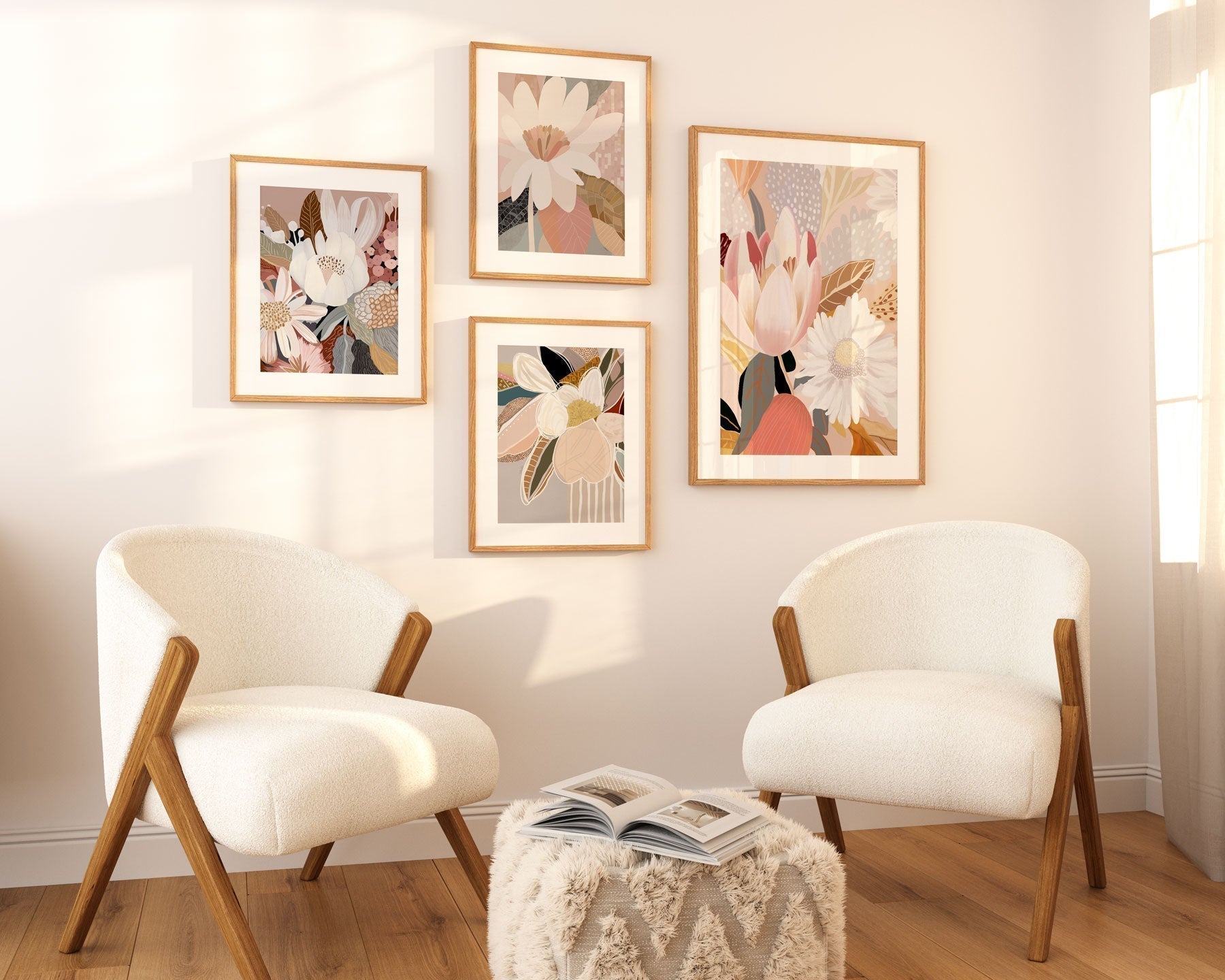
Credit: www.havenprints.com.au
Gallery Wall Maintenance
A gallery wall isn’t just “hang it and forget it. ” Keep it looking fresh with a little care.
- Dust frames regularly with a microfiber cloth.
- Check for crooked or shifted frames every few months.
- Update with new photos or art to keep the wall evolving.
- For sun-exposed spots, use UV-protective glass to prevent fading.
Real-life Examples And Inspiration
Many famous homes and museums use gallery walls to make a statement. For example, the Salon Carré in the Louvre is a classic “salon-style” wall, filled top to bottom with art. Modern interior designers often show grid layouts with black-and-white photos for a timeless look.
You can find more creative ideas and step-by-step guides from the Architectural Digest, which features real-life examples and expert tips.
Budgeting For Your Gallery Wall
Costs can vary widely based on the number of pieces and the type of frames you choose.
| Item | Low Cost | Mid-Range | Premium |
|---|---|---|---|
| Frames (each) | $10 | $25 | $60+ |
| Art Prints (each) | $5 | $20 | $80+ |
| Hanging Hardware (set) | $5 | $10 | $20 |
| Matting (each) | $2 | $7 | $20+ |
For a basic wall of 6–8 pieces, you can expect to spend $100–$300, but using thrifted frames and digital downloads can cut costs.
Advanced Tips Most Beginners Miss
- Test in different light: Daylight and lamps can change how colors appear. Check your layout at various times.
- Create mockups on your computer: Take a photo of your wall, then use a free app to arrange digital images of your art before hanging.
- Mix frame depths: Using deeper frames with shallow ones adds subtle dimension, making the wall feel more dynamic.
Frequently Asked Questions
How High Should I Hang My Gallery Wall?
For most rooms, the center of your gallery wall should be about 57 inches from the floor, which is the average eye level. For gallery walls above furniture, leave 6–8 inches of space above the sofa or headboard.
Can I Make A Gallery Wall Without Nails?
Yes! Use removable adhesive strips or hooks, especially for lighter frames or rented spaces. Always check the weight limits and follow the instructions for best results.
What’s The Best Way To Mix Colors And Art Styles?
Choose a unifying element, like a color palette, frame style, or theme. For example, use all black frames with different art styles, or choose artwork with similar colors. This keeps the wall looking cohesive.
How Do I Keep My Gallery Wall From Looking Cluttered?
Stick to consistent spacing (2–4 inches), and use a visual anchor piece. Step back often during planning and remove any piece that doesn’t fit the overall look.
Where Can I Find Affordable Art For My Gallery Wall?
Great sources include online marketplaces, local art fairs, thrift shops, and websites like Etsy. You can also print high-resolution images from free art libraries, such as the Metropolitan Museum of Art’s digital collection.
Far more than decoration, a gallery wall creates a visual representation of your personal taste and experiences. When planned with care, it can bring joy and inspiration every day. Take your time, experiment, and let your wall tell your story.
