
Keeping your dishwasher clean is not just about looks. It’s about making sure your dishes come out sparkling, your kitchen smells fresh, and your machine lasts longer. Many people don’t realize that dishwashers need regular cleaning, just like any other kitchen appliance. One of the simplest and most effective ways to clean a dishwasher is using vinegar. Vinegar is cheap, easy to find, and safe for most dishwashers. But there’s more to cleaning with vinegar than just pouring it inside and pressing start. This guide will show you how to clean your dishwasher with vinegar step-by-step, explain why it works, and share tips that even experienced users often miss.
Why Dishwashers Need Cleaning
Dishwashers look clean on the outside, but inside, things can get messy. Over time, bits of food, grease, soap scum, and minerals from hard water can build up. This buildup can cause:
- Bad odors
- Poor cleaning results
- Clogged drains or spray arms
- Shorter machine lifespan
According to the National Sanitation Foundation, dishwashers can harbor bacteria like E. coli and Salmonella if not cleaned regularly. That’s a big reason to keep your dishwasher in top shape.
Common Signs Your Dishwasher Needs Cleaning
- Cloudy dishes or glasses
- Unpleasant smell inside the machine
- Visible gunk or debris at the bottom
- Water doesn’t drain properly
- White spots or film on dishes
Ignoring these signs can lead to expensive repairs or even a broken dishwasher.
How Vinegar Cleans Your Dishwasher
Vinegar is a natural acid. It’s great for breaking down mineral deposits, grease, and soap scum. When used properly, vinegar can:
- Dissolve hard water stains
- Remove odors
- Loosen food particles
- Clean hidden parts like spray arms and filters
The most common vinegar used is white distilled vinegar. It’s affordable and strong enough to clean but safe for most dishwasher parts.
Vinegar Vs. Other Cleaners
Let’s look at how vinegar compares to other common dishwasher cleaners.
| Cleaner | Effectiveness | Safety | Cost |
|---|---|---|---|
| White Vinegar | Good for odors, mineral stains | Safe for most parts | Low |
| Commercial Dishwasher Cleaner | Very effective | Safe if used correctly | Medium to high |
| Baking Soda | Removes odors, mild scrubbing | Safe | Low |
| Bleach | Kills germs, removes stains | Unsafe for stainless steel parts | Low |
Many people use vinegar because it is safe, cheap, and doesn’t leave a chemical smell.
Preparing Your Dishwasher For Cleaning
Before you start with vinegar, prepare your dishwasher to get the best results.
Steps To Prepare
- Empty the dishwasher. Remove all dishes, racks, and utensil holders.
- Check for debris. Look at the drain, filter, and spray arms for food bits or gunk.
- Remove and clean parts. Take out the filter and utensil holder and wash them in warm, soapy water.
- Inspect spray arms. Use a toothpick or brush to clear any holes blocked by debris.
- Wipe around the door. Use a damp cloth to clean the rubber seals and edges.
These steps make sure vinegar can reach every part inside.
Non-obvious Insight
Many people skip checking the drain and filter. These parts can trap food and cause odors. If you don’t clean them first, vinegar can’t do its job properly.
Step-by-step: Cleaning Dishwasher With Vinegar
Now, let’s get to the heart of the process. Cleaning your dishwasher with vinegar isn’t complicated, but following each step makes a difference.
What You Need
- White distilled vinegar (about 2 cups)
- Soft cloth
- Small brush or toothbrush
- Toothpick (for spray arms)
Cleaning Steps
- Remove all racks and parts.
- Take out removable racks, utensil holders, and filters.
- Wash them in warm, soapy water and dry.
- Check and clean spray arms.
- Look for clogged holes.
- Use a toothpick or small brush to clear them.
- Wipe inside surfaces.
- Use a damp cloth to clean the door, edges, and rubber seals.
- Pay special attention to any mold or sticky areas.
- Place vinegar inside.
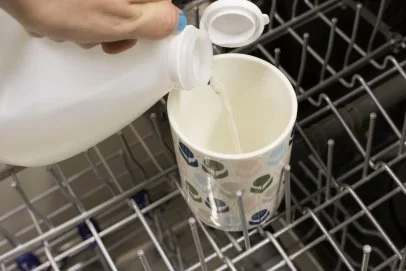
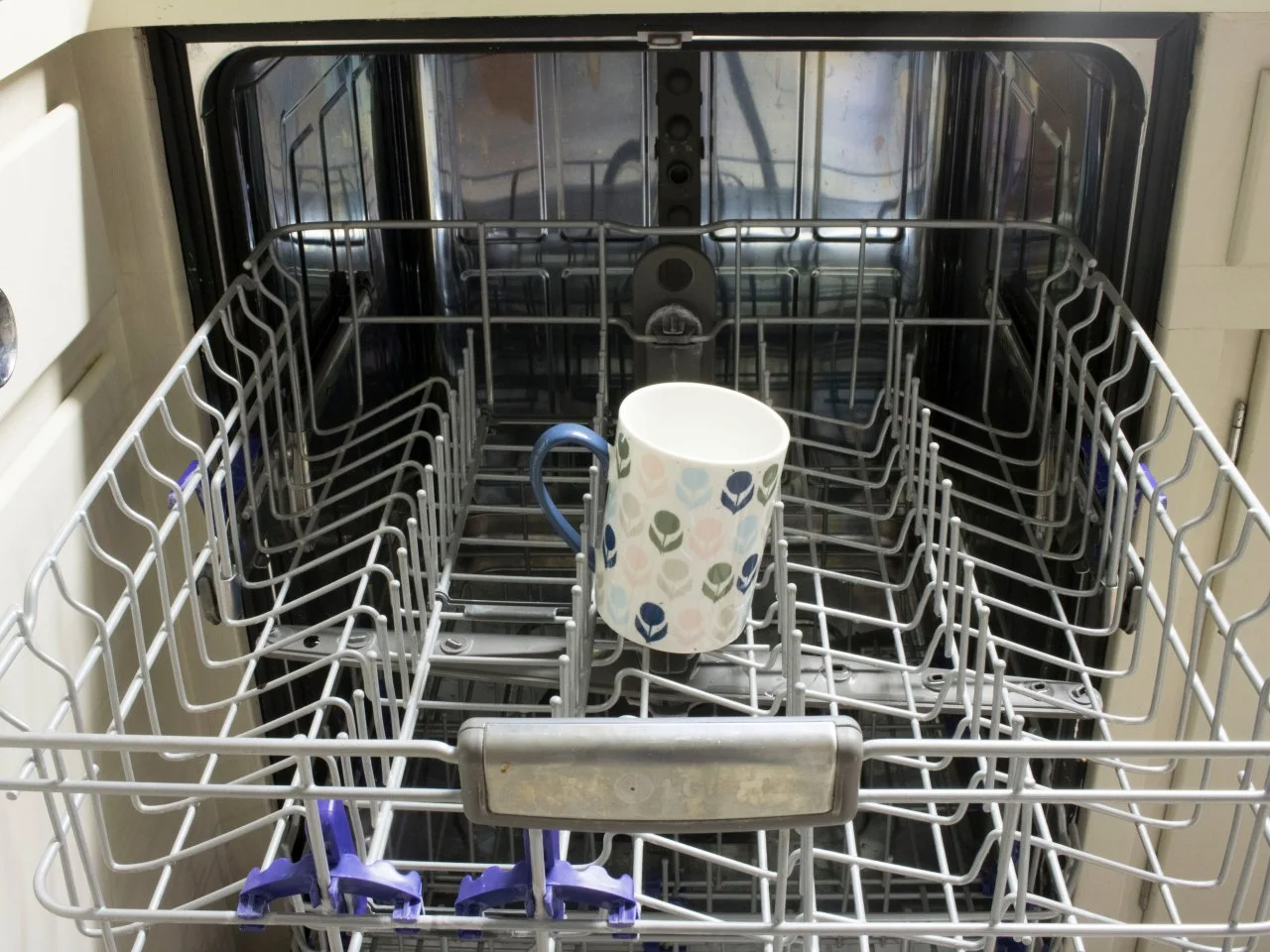
- Put about 2 cups of white vinegar in a dishwasher-safe cup or bowl.
- Place it on the bottom rack.
- Run a hot water cycle.
- Close the dishwasher and run it on the hottest setting.
- Vinegar will spread through the system, dissolving buildup and odors.
- Optional: Baking soda rinse.
- After the vinegar cycle, sprinkle 1 cup of baking soda on the bottom.
- Run a short hot water cycle for extra odor removal.
- Reassemble and wipe.
- Put back racks and filters.
- Wipe any remaining spots with a cloth.
Time Needed
- Preparation: 10–15 minutes
- Cleaning cycle: About 1 hour
- Finishing up: 5–10 minutes
Example
Let’s say your dishwasher smells bad and leaves spots on glasses. After following these steps, you will notice:
- No more odor inside
- Glasses come out clear
- Less buildup on filters and spray arms
Many people are surprised at how much better their dishwasher performs after one cleaning.
How Often Should You Clean With Vinegar?
Regular cleaning is key to a healthy dishwasher. The frequency depends on how often you use it and your water quality.
| Usage Level | Recommended Cleaning Frequency |
|---|---|
| Daily use | Once a month |
| 3–5 times a week | Every 2 months |
| Occasional use | Every 3–4 months |
If you live in an area with hard water, clean more often. Hard water leaves more mineral deposits.
Tips For Better Dishwasher Cleaning
Some tricks can help you get even better results from vinegar cleaning. Here are practical tips:
Use The Right Vinegar
Always use white distilled vinegar. Apple cider vinegar or flavored vinegars can leave stains or odors.
Avoid Overfilling
Don’t put too much vinegar. Two cups is enough. Too much can damage rubber parts over time.
Use Hot Water
Hot water helps vinegar dissolve mineral deposits faster. Always select the hottest cycle available.
Clean Filters First
If filters are dirty, vinegar will not reach every part. Clean filters before running the vinegar cycle.
Don’t Mix Vinegar And Bleach
Mixing vinegar and bleach creates dangerous fumes. Never use them together.
Check Manufacturer Advice
Some dishwasher brands warn against using vinegar. Always check your manual before starting. If your model has sensitive parts, use baking soda or a commercial cleaner instead.
Credit: www.hgtv.com
Common Mistakes To Avoid
Even experienced users can make mistakes when cleaning their dishwasher with vinegar. Here are a few to watch out for:
- Skipping filter cleaning: The filter traps food. If it’s not clean, vinegar can’t reach all the buildup.
- Using vinegar too often: Excessive use can damage rubber seals. Monthly is enough for most homes.
- Pouring vinegar directly in bottom: Always use a bowl or cup. Direct contact can weaken rubber parts.
- Ignoring spray arms: Clogged spray arms reduce cleaning power. Always check and clean them first.
- Using other types of vinegar: Only white distilled vinegar is recommended.
What To Do If Your Dishwasher Still Smells
If your dishwasher still smells after cleaning with vinegar, try these steps:
- Run a baking soda rinse (see above).
- Check the drain for trapped food.
- Clean the filter again.
- Wipe the door seals with a mild bleach solution (only if your dishwasher allows bleach).
Sometimes, persistent smells mean there’s a hidden problem, like mold in the drain hose. If you’ve tried everything, consider calling a professional.
/clean-dishwasher-with-vinegar-6834347-hero-c5e579575da942d8b700b5eeef57c345.jpg)
Credit: www.thespruce.com
Is Vinegar Safe For All Dishwashers?
Most dishwashers can handle vinegar, but some newer models have parts that are sensitive to acids. Vinegar may damage:
- Rubber seals
- Metal parts
- Painted surfaces
Always check your user manual. If you’re unsure, use baking soda or a commercial cleaner designed for your brand.
Dishwasher Materials And Vinegar Safety
Here’s a quick look at how vinegar affects different dishwasher materials.
| Material | Vinegar Safety |
|---|---|
| Stainless steel | Safe if not overused |
| Plastic | Safe |
| Rubber | Can weaken over time |
| Painted surfaces | May fade if exposed repeatedly |
Non-obvious tip: If your dishwasher has colored parts, wipe them with a damp cloth rather than exposing them to vinegar.
Benefits Of Cleaning With Vinegar
Cleaning your dishwasher with vinegar has many advantages:
- Removes odors: No more musty smells.
- Improves cleaning power: Dishes come out cleaner.
- Saves money: Vinegar is much cheaper than commercial cleaners.
- Eco-friendly: No harsh chemicals.
- Simple process: No special tools or products needed.
A study by the Environmental Protection Agency found that regular appliance cleaning can save up to 20% on energy costs. When your dishwasher works better, it uses less water and power.
Real-life Example: Family Dishwasher Transformation
The Johnson family in Ohio had cloudy glasses and a smelly dishwasher. They tried commercial cleaners, but nothing worked. After following the vinegar cleaning steps:
- The smell disappeared after one cycle.
- Glasses came out crystal clear.
- The dishwasher was quieter and drained better.
This example shows that even simple steps can make a big difference.
How Vinegar Cleaning Helps With Hard Water
Hard water is common in many areas. It leaves mineral deposits inside dishwashers, which can cause cloudy dishes and clog spray arms. Vinegar dissolves these minerals, helping your dishwasher work better.
If your water is very hard, consider using vinegar cleaning every month and installing a water softener. This will keep your machine in good shape and prevent buildup.
Bonus: How To Clean The Exterior With Vinegar
Don’t forget the outside of your dishwasher. Vinegar can help here too.
Steps
- Mix equal parts vinegar and water.
- Dip a soft cloth in the mixture.
- Wipe the door, buttons, and handle.
- Dry with a clean towel.
This removes fingerprints and keeps your kitchen looking neat.
Should You Use Vinegar And Baking Soda Together?
Some people use vinegar and baking soda together. They are both safe and effective, but don’t mix them in the same cycle. Instead:
- Clean with vinegar first.
- Then sprinkle baking soda and run a short cycle.
This two-step process removes both odors and stains.
Credit: www.hgtv.com
How Dishwasher Cleaning Improves Health
A dirty dishwasher can spread germs onto your dishes. Regular cleaning with vinegar reduces bacteria and mold. According to the NSF International, washing machines and dishwashers should be cleaned at least once a month to avoid health risks.
When To Call A Professional
If you’ve cleaned your dishwasher with vinegar and still have problems, it may be time to call a professional. Signs you need expert help include:
- Persistent bad smells
- Water not draining
- Loud noises during operation
- Visible mold or mildew in hard-to-reach areas
A professional can open up parts of the dishwasher that you cannot reach and fix hidden issues.
Extra Tips For Long-term Care
To keep your dishwasher working well:
- Always scrape off large food pieces before loading dishes.
- Use the right detergent for your water type.
- Clean filters monthly.
- Run the vinegar cycle regularly.
- Check and clean spray arms every few months.
These steps can extend your dishwasher’s life and improve performance.
Frequently Asked Questions
How Much Vinegar Should I Use To Clean My Dishwasher?
Use about 2 cups of white distilled vinegar for each cleaning. Place it in a dishwasher-safe bowl on the bottom rack and run a hot cycle.
Can Vinegar Damage My Dishwasher?
If used too often or poured directly onto rubber parts, vinegar can weaken seals. Monthly cleaning is safe for most machines, but always check your user manual.
Is It Safe To Use Vinegar In Stainless Steel Dishwashers?
Yes, but don’t overuse. Vinegar is safe for stainless steel, but too much can dull the finish over time. Use a bowl or cup to avoid direct contact with metal surfaces.
Can I Clean My Dishwasher With Vinegar And Baking Soda At The Same Time?
It’s better to use them in separate cycles. Vinegar dissolves minerals and grease, while baking soda removes odors. Mixing them directly can reduce cleaning power.
What If My Dishwasher Still Smells After Cleaning With Vinegar?
Try a baking soda rinse, clean the filter and drain, and wipe seals with a mild bleach solution if your machine allows. If smells persist, consider professional help.
Cleaning your dishwasher with vinegar is a simple, affordable, and eco-friendly way to keep it running smoothly. With regular care and attention, you’ll enjoy cleaner dishes, a fresher kitchen, and a longer-lasting machine. If you want more detailed maintenance tips, check out Consumer Reports for expert advice.
